
GLP-1热潮推高药企库存,营运资金承压加剧
The Hackett Group 2026年北美营运资金调查显示,2025年制药业现金转换周期同比延长10%至185.8天,库存天数激增近16天至251.5天,主要受GLP-1及生物制剂需求驱动。收入增长7.7%至约4800亿美元,净利飙升77.5%,但库存与应收压力抵消了应付账款改善。
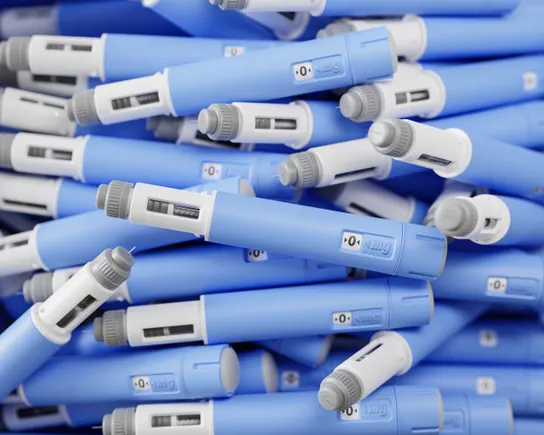
In 2025, pharmaceutical companies saw a significant increase in cash tied up in inventory. Sustained strong demand for specialty drugs, coupled with investments in new production capacity, drove the industry's second consecutive year of growth, but also intensified working capital pressure.
According to The Hackett Group's 2026 North American Working Capital Survey, the pharmaceutical industry's cash conversion cycle (CCC) lengthened by 10% in 2025 to nearly 186 days, an increase of about 17 days from the prior year. The survey analyzed the financial performance of the 1000 largest non-financial public companies in the US. Days Inventory Outstanding (DIO) increased by nearly 16 days to 251.5 days, becoming the biggest drag on pharmaceutical companies' working capital performance.
Inventory pressure is a major drag
Inventory was, for the second consecutive year, the biggest burden on pharmaceutical companies' working capital performance. DIO rose from 235.6 days in 2024 to 251.5 days in 2025, contributing nearly 16 days of the extension to the cash conversion cycle. Hackett noted that Amgen is a typical example of the long production cycles and high inventory pressure associated with biologics and specialty drugs, while Pfizer also saw increased inventory management pressure due to portfolio changes and demand returning to normalcy.
Damon Rottermond, Finance Transformation Director at The Hackett Group, told CFO.com that changes in the industry's drug portfolio are a significant reason for the lengthening inventory cycles.
"I think part of the reason is the shift from traditional drugs to gene therapies, which have longer lead times and require companies to hold more inventory. This has pushed DIO up to some extent," he said.
Supply chain adjustments add another layer of complexity. Hackett pointed out that a significant amount of active pharmaceutical ingredients (APIs) and drug components remain concentrated in Asia, particularly India and China. At the same time, pharmaceutical companies are expanding US-based manufacturing capacity to reduce reliance on overseas supply routes.
"The rise in DIO indicates they are indeed affected by supply chain shifts," Rottermond said. "Many companies are also moving towards a 'China Plus 5' strategy, and India is doing the same, which also has an impact. Additionally, there are tariff shocks, which are a key part of the pharmaceutical industry's story."
The tug-of-war between receivables and payables
In 2025, pharmaceutical companies also faced greater pressure from accounts receivable: Days Sales Outstanding (DSO) rose from 70.4 days to 75.7 days, adding about 5 days to the cash conversion cycle. Days Payable Outstanding (DPO) increased by about 4 days to 141.4 days, providing some relief, but not enough to offset the dual pressure from inventory and accounts receivable.
As a result, the pharmaceutical industry's cash conversion performance deteriorated for the second consecutive year. The industry's CCC rose from 168.7 days in 2024 to 185.8 days in 2025, despite significant improvements in revenue and profitability over the same period.
Drug demand forms a complex equation
The demand environment that has driven the pharmaceutical industry into its current working capital predicament is still evolving, especially concerning high-cost specialty drugs and, more recently, GLP-1 medications.
Bank of America said this month that it now spends over $250 million annually on GLP-1 drugs for its employees, a figure that was nearly zero five years ago. This new expense accounts for about 13% of the bank's annual medical costs, which exceed $2 billion for its approximately 211,000 employees.
Employers across industries expect this demand to continue growing. A survey of 105 employers conducted by the Business Group on Health earlier this year showed that 87% of respondents expect the launch of new oral GLP-1 drugs to drive higher overall demand.
Cost pressures are also forcing some CFOs to reassess how much of this demand they are willing to bear. Among employers covering GLP-1 weight-loss drugs, 72% said they are likely to continue coverage in 2027, while 10% said they might not.
Mercer's 2027 Health & Welfare Strategy Survey also found similar signals of cost pressure: prescription drug benefit costs are expected to rise by about 9% in 2026. This year, only 6% of large employers dropped GLP-1 weight-loss drug coverage, and another 5% plan to drop it or are considering doing so in 2027. Additionally, 27% have tightened or plan to tighten usage controls.
The cost pressure on employers is not limited to GLP-1s. PwC projects that the average cost of group medical benefits will rise by 9% for the second consecutive year in 2027, driven primarily by specialty drugs, higher provider reimbursements, and increased healthcare utilization. Over 85% of health plans surveyed by PwC expect pharmacy costs alone to rise more than the overall medical cost trend.